Back
2026 Interior Design: Soft Brutalism and Primitive Nature
Brutalist interior design. A new aesthetic of matter and sensory harmony, combining soft brutalism and primitive nature.
“New Brutalism” is the term used in the years after the Second World War to define a simple architectural language in which buildings’ true structural identity was revealed.
Le Corbusier, Mies van der Rohe, James Stirling and Sir Owen Williams were just some of the masters who constructed an ethic of functionality based on pure forms and bare materials.
The term became established in the ‘50s thanks to English architects Alison and Peter Smithson and became iconic with the essay by Reyner Banham “The New Brutalism: Ethic or Aesthetic?” (1966), in which he claimed that Brutalism was not just an aesthetic current but rather a moral stance.
It was a form of “truth telling” through materials such as béton brut, or bare concrete, steel, stone and glass.
Matter, light, comfort: the gentle power of the new Brutalism
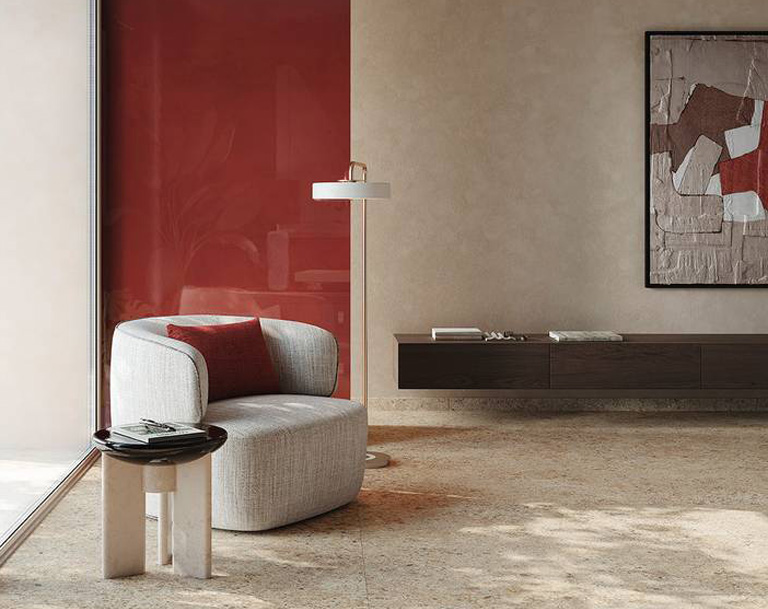
Brutalist interior design for 2026 embraces a soft tactility, where concrete appears velvety, stone regains a vibrant porosity, and metal loses its shine in favour of warm, matt surface patinas.
Matter is still central, but it dialogues with voids and transparencies.
Surfaces are solid but softened by velvety textures, powdery shades and light that interweaves with matter to create a quiet intensity, in which every surface expresses the work of the hands or mind that shaped it.
In other words, the gentle strength of contemporary Soft Brutalism rejects monumental massiveness and rediscovers the beauty of flaws and the marks left on matter by people and the passage of time.
Soft Brutalism and Primitive Nature: a new material humanism
Soft Brutalism and Primitive Nature converge in a new architectural design poetic: a material humanism that celebrates the life of matter and its ability to create wellbeing.
As Ilaria Pizzoferrato, Image Consulting & Trend Forecasting, comments, the new Gentle Brutalism is an evolution of biophilia: “Simplicity of lines and purity of matter, but with extremely stylish details. It’s a hybrid between purity and sophistication, where concrete, stone, metals and glass combine with warm, tactile surfaces.”
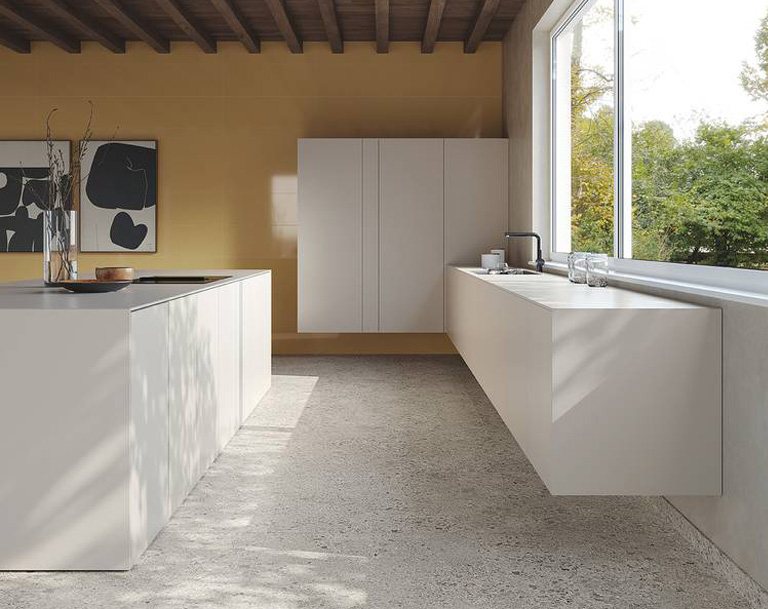
Effects achieved with contrasts: béton brut and steel are softened alongside wood, copper and glass, while colour schemes are inspired by mineral hues like white, beige, taupe and ecru.
Instead of being static, matter is continually transformed: rough, matt, vibrant, constantly mutating in the light.
In this context, materials like concrete-effect stoneware provide the perfect blend of style and function.
Tough, exquisite and authentic, Fap ceramiche porcelain stoneware surfaces reinterpret the character of concrete with a soft feel and appearance ideal for contemporary interiors.
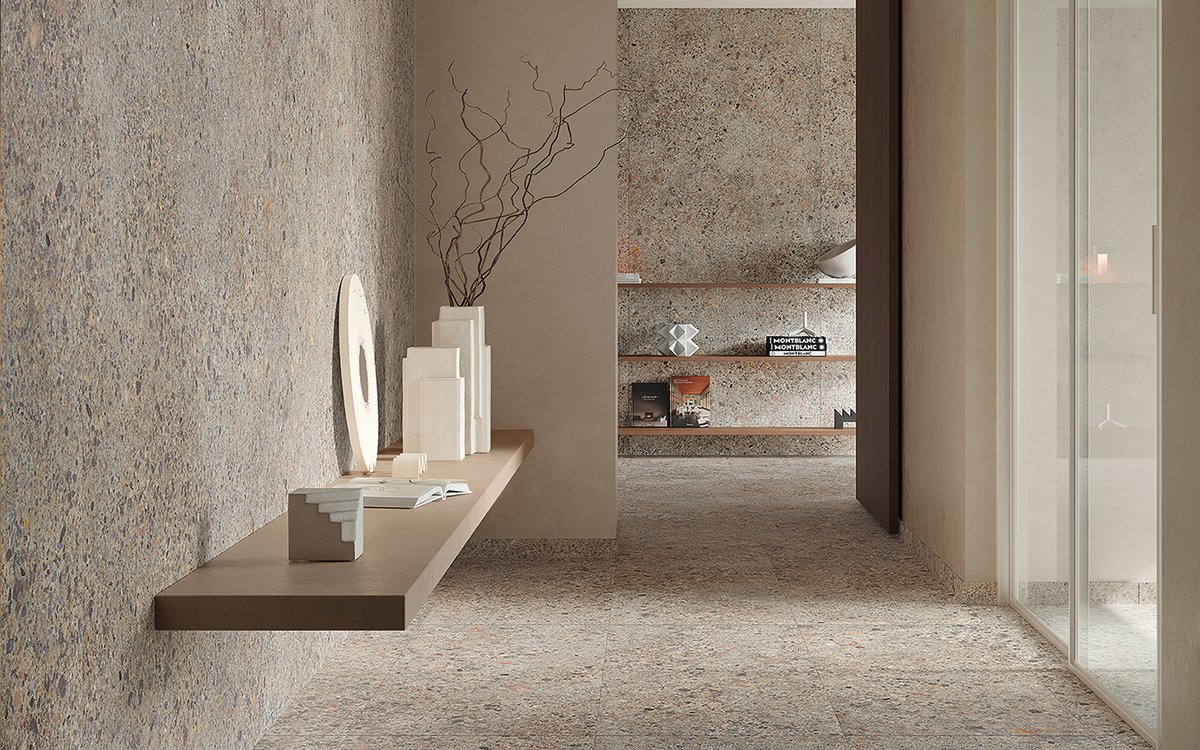
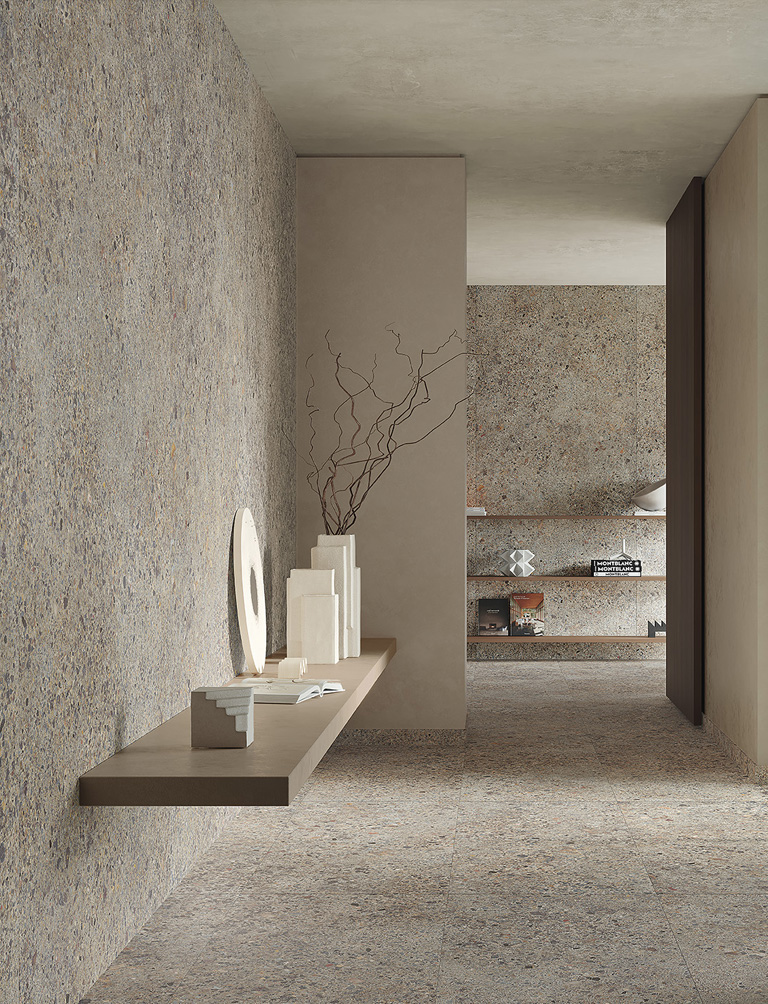
Similarly, the new Materia Eclettica collection by Fap ceramiche embodies the sensory, biophilic spirit of Soft Brutalism: uneven textures, neutral colours and surfaces that dialogue with the light.
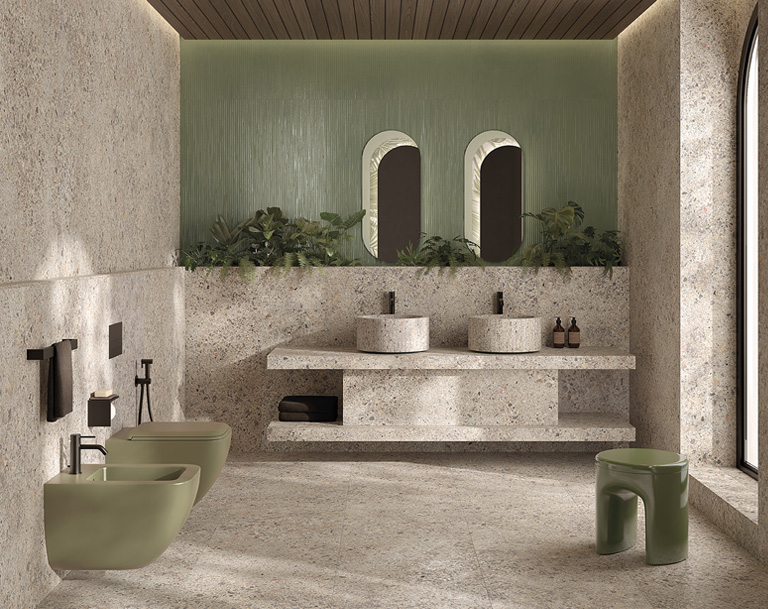
Materia Eclettica provides a perception of harmony, reconciling solids and voids, form and comfort following the guiding rule of the latest industrial style, in which structure becomes aesthetic and functionality is transformed into emotion.
Matter takes on the appearance of a strong, dense, dry conglomerate. The consistency of every single pebble and fragment set into the stoneware is perceptible to the fingertips thanks to the true touch treatment, and changes visually with the colour variations that soften the surfaces’ brutalist and biophilic character.