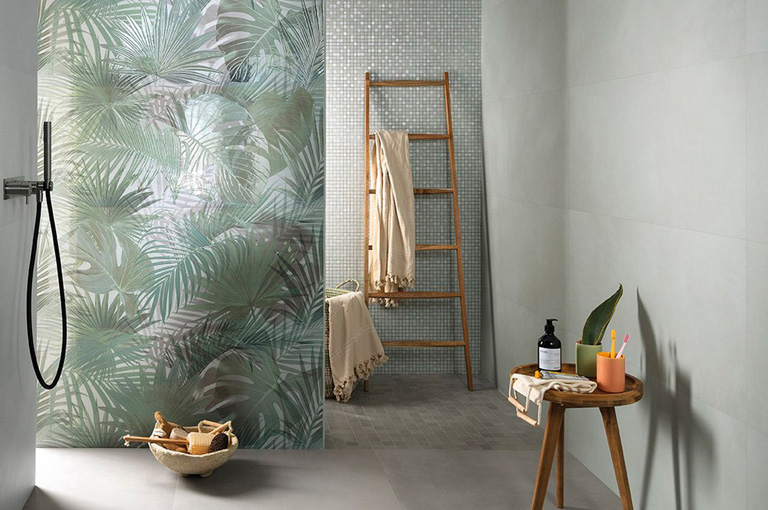
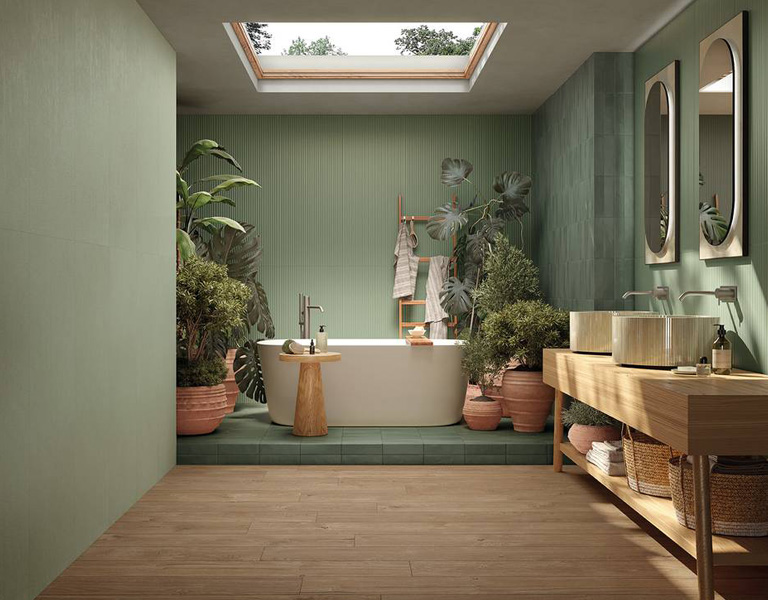
Biophilia refers to our innate attraction to nature and natural processes.
Oliver Heath
Back
Biophilic design: natural materials and porcelain stoneware in contemporary interiors
The term “biophilia", coined by psychologist Erich Fromm and made famous by biologist Edward O. Wilson, describes the innate psychological and physical bond which ties humans to nature.
Using biophilic design is not just a simple aesthetic choice, but rather a response to the need to reconnect with living elements in an ever-more urbanised world. This approach satisfies our ancestral desire for harmony and regeneration, transforming closed spaces into ecosystems able to reduce stress and improve quality of life.
The essence of biophilic design: material and perception
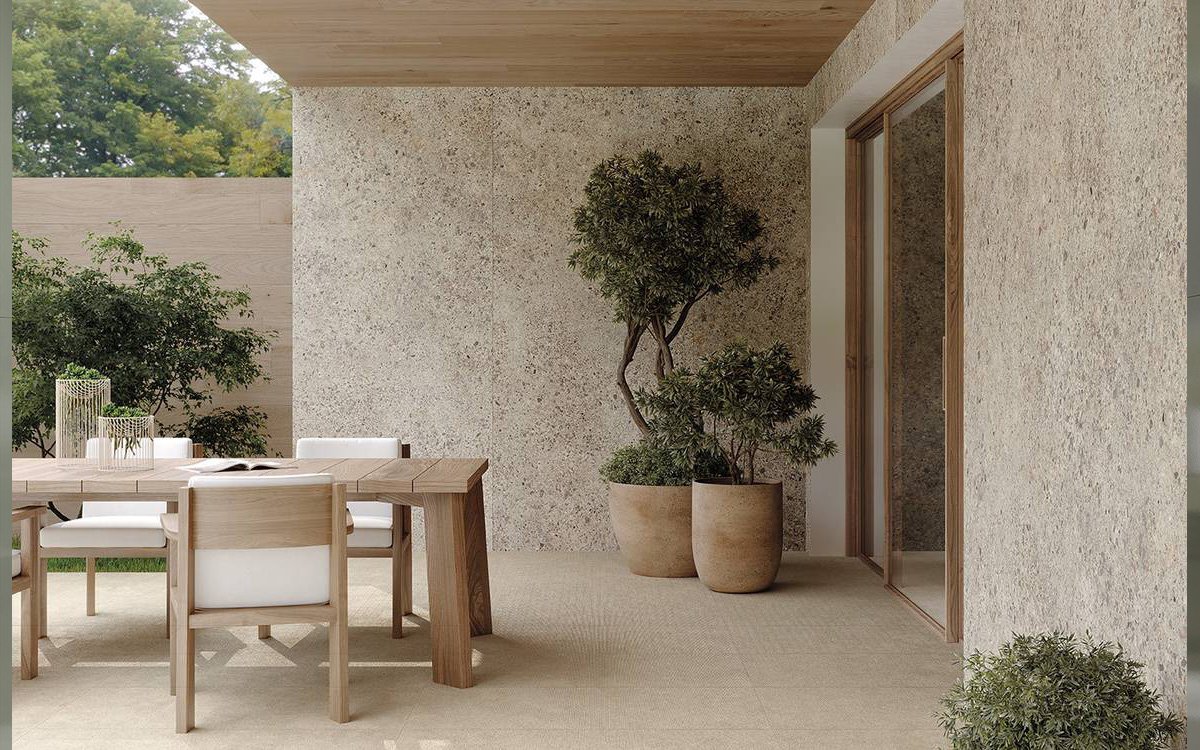
In contemporary interiors, this trend expresses itself through the use of natural materials such as wood, raw stone, cork and organic fabrics, such as linen and hemp. The goal is to create spaces which are inviting for tactile contact, favouring curved lines, soft edges and irregular surfaces reminiscent of organic forms.
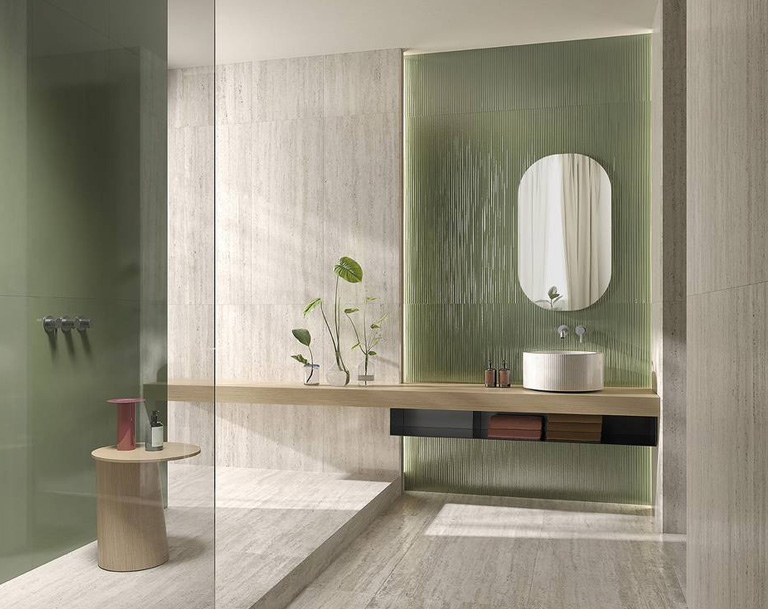
Interior design tips: Fap collections for a biophilic house
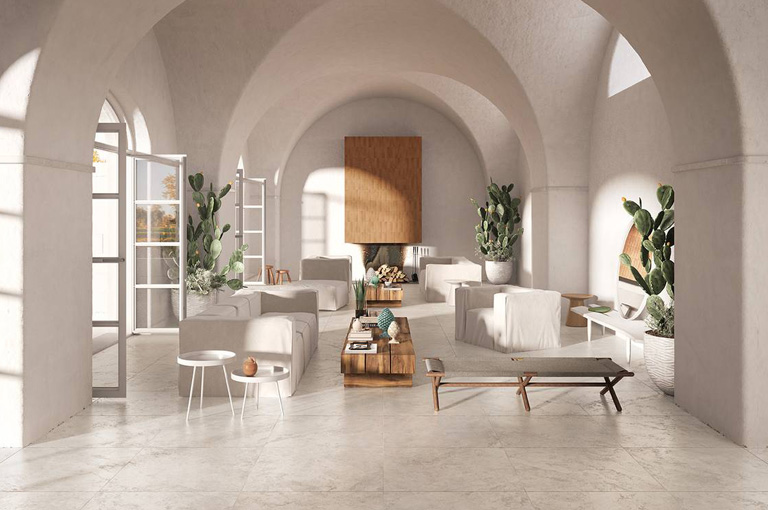
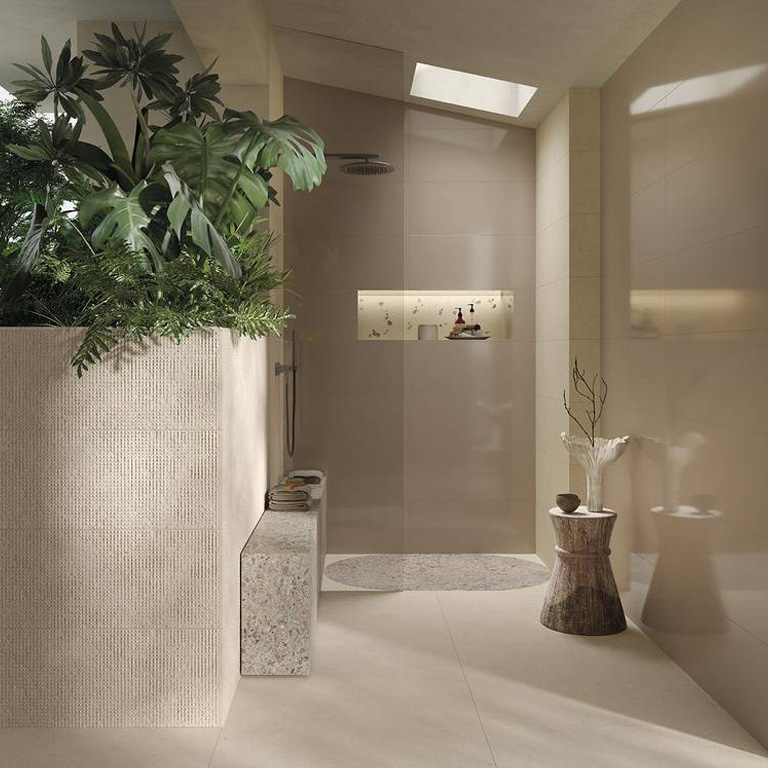
The use of ceramic elements reminiscent of earth, stone and wood allows the creation of that connection with the outdoors which is essential for domestic balance.
Here are some valuable solutions for incorporating this philosophy into your projects.
The warmth of wood and the breath of nature
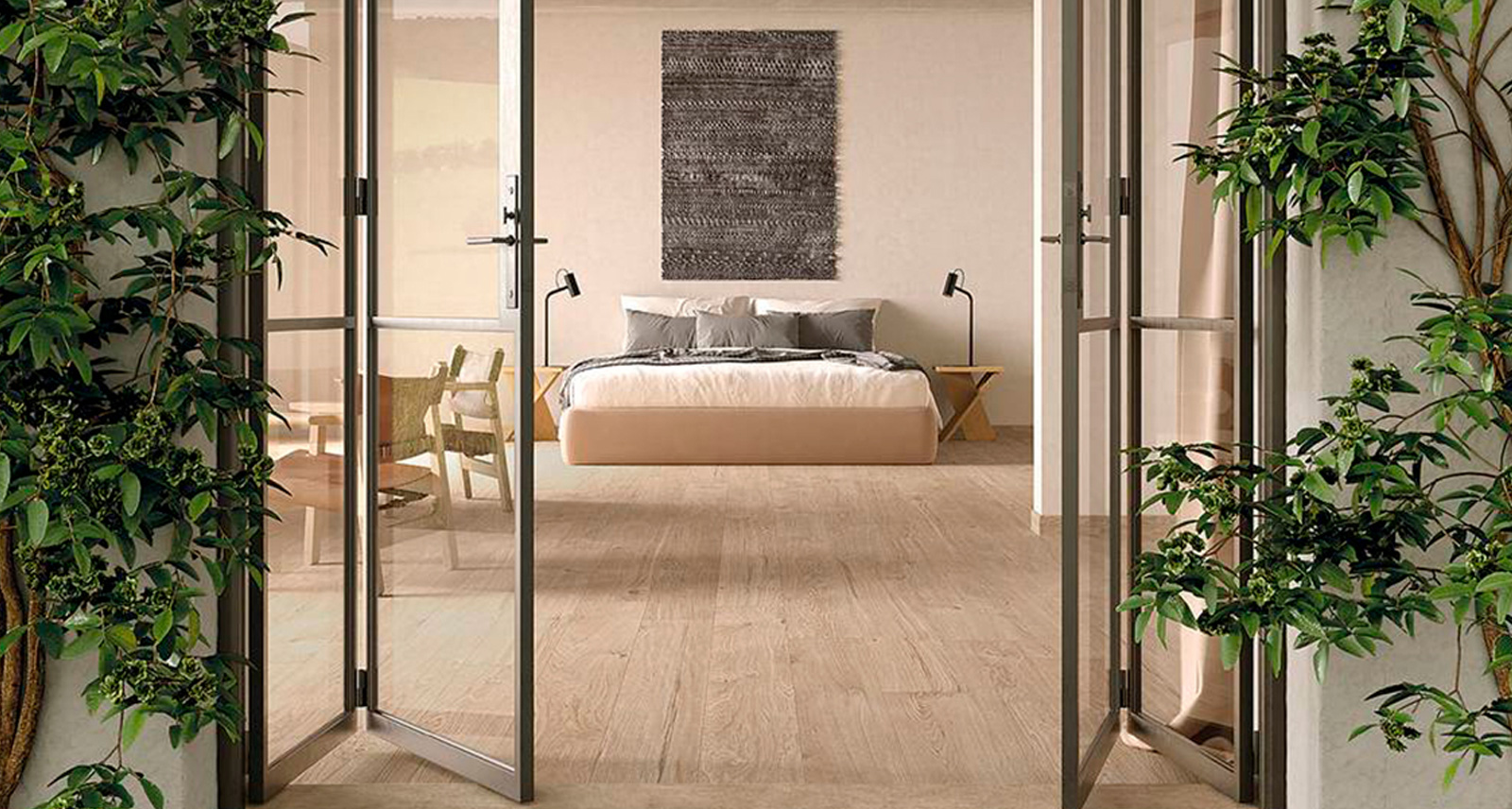
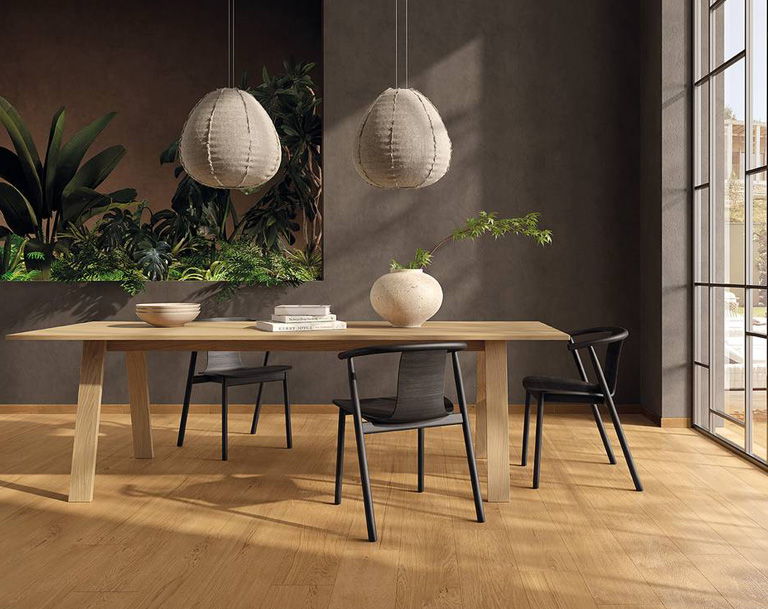
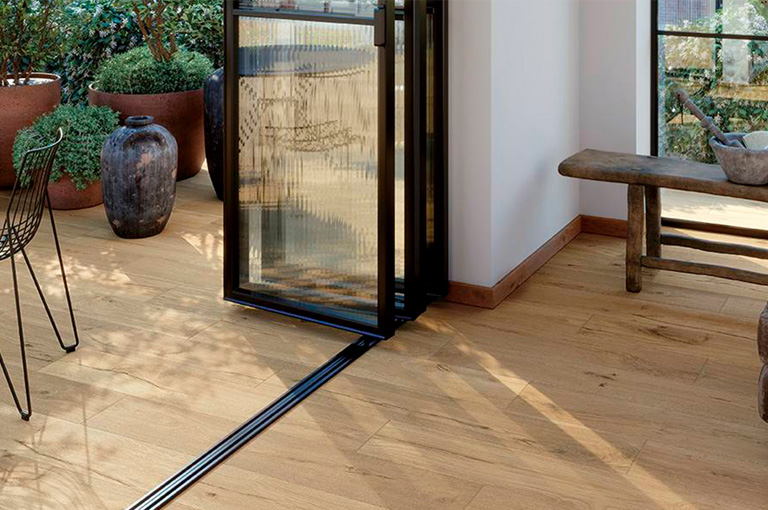
For those looking for a fusion between Japandi style and Biophilic design, the Plein Air collection from Fap Ceramiche is ideal. This wood-effect porcelain stoneware is a valid alternative to parquet.
Thanks to the True Touch treatment, the surface maintains knots and continuous veining, which seem carved by nature: the result is a material which is vibrant to the touch, and able to offer the extreme toughness typical of wood-effect porcelain stoneware without having to give up the poetry of natural wood.