More than a return to the past, this is a sophisticated evolution that gives interiors great visual and tactile impact through designer decorative tiles.
Back
The new decorativism: the wall as a creative work
Interior design is undergoing a profound conceptual metamorphosis: minimalism is giving way to a renewed sensitivity for ornament.
The return of decorative coverings in interior design
For years, geometric rigour defined interiors with neutral, quiet surfaces; today, design is rediscovering the value of expressiveness.
Decorative ceramic walls become the central element of the furnishing scheme and the design narrative.
The new decorativism moves between high-fashion suggestions, references to nature and abstract geometries, responding to the needs of both clients and designers for personalisation and uniqueness.
Surface as architectural language
The trend towards integrating decorative tiles within contemporary spaces redefines the relationship between design and decoration itself, elevating the wall to a creative work.
Decorative interior design coverings play with volumes, alter the perception of space and define its atmosphere.
Ceramic material is becoming ever more versatile and rich, capable of absorbing and reflecting light in ever new ways, offering architects and designers a fundamental expressive tool.
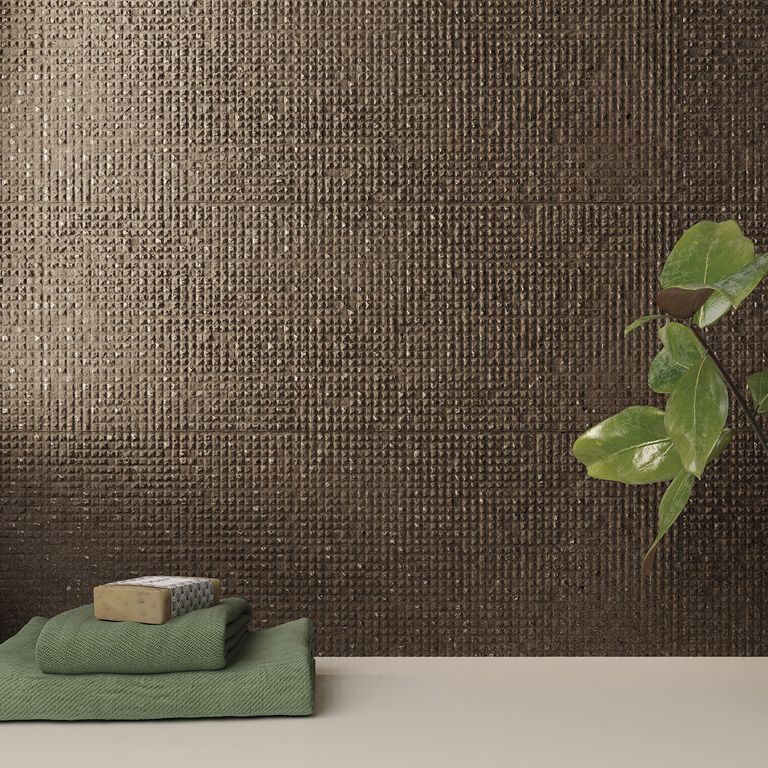
From an industrial standpoint, this balance between aesthetics and technique is made possible by cutting-edge processing: the structure is created through a pad-pressing process, which allows deep relief and engineered variations to be impressed into the ceramic body to enhance the pattern's three-dimensionality.
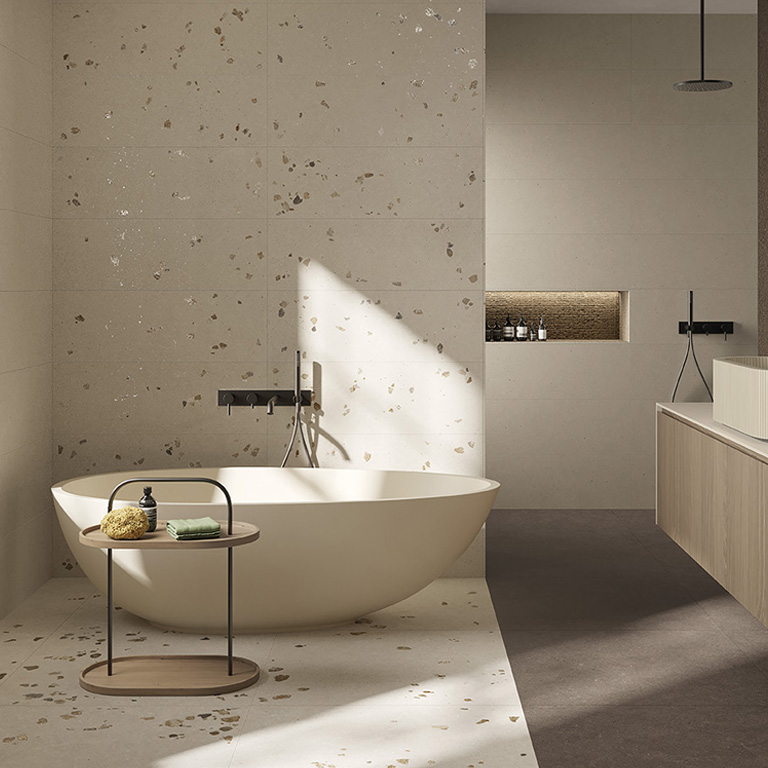
In this case, decorativism is expressed through the material and its perfect mimicry, the richness of detail and a taste for touch and feel, creating minimal yet highly sensory environments.
Applying these decorative coverings in interior design makes it possible to create walls capable of characterising the various spaces of the home and the contract sector, in dialogue with the surrounding furnishings.
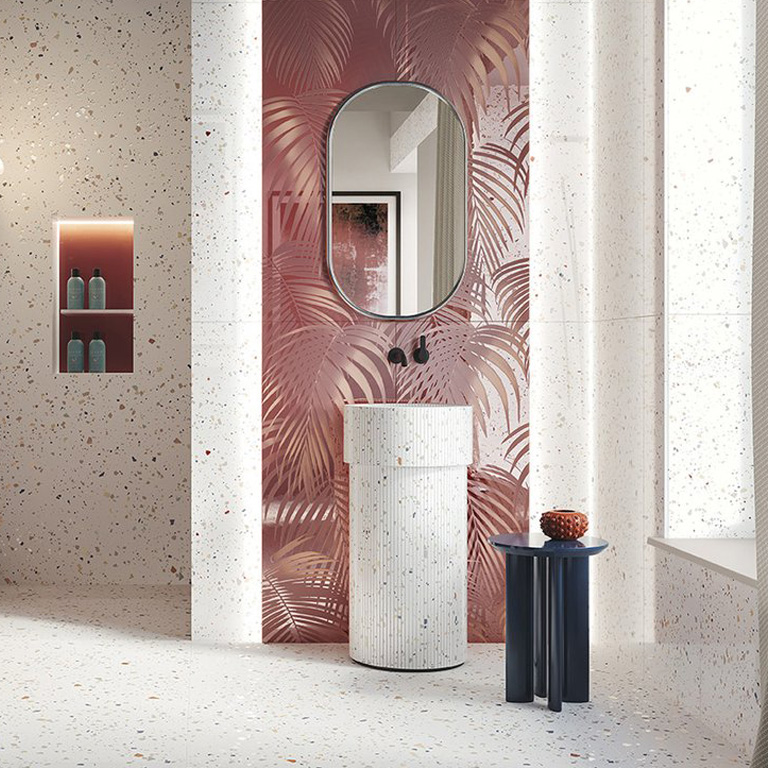
Ceramic wall decorations are also able to bring colour and light into interiors.
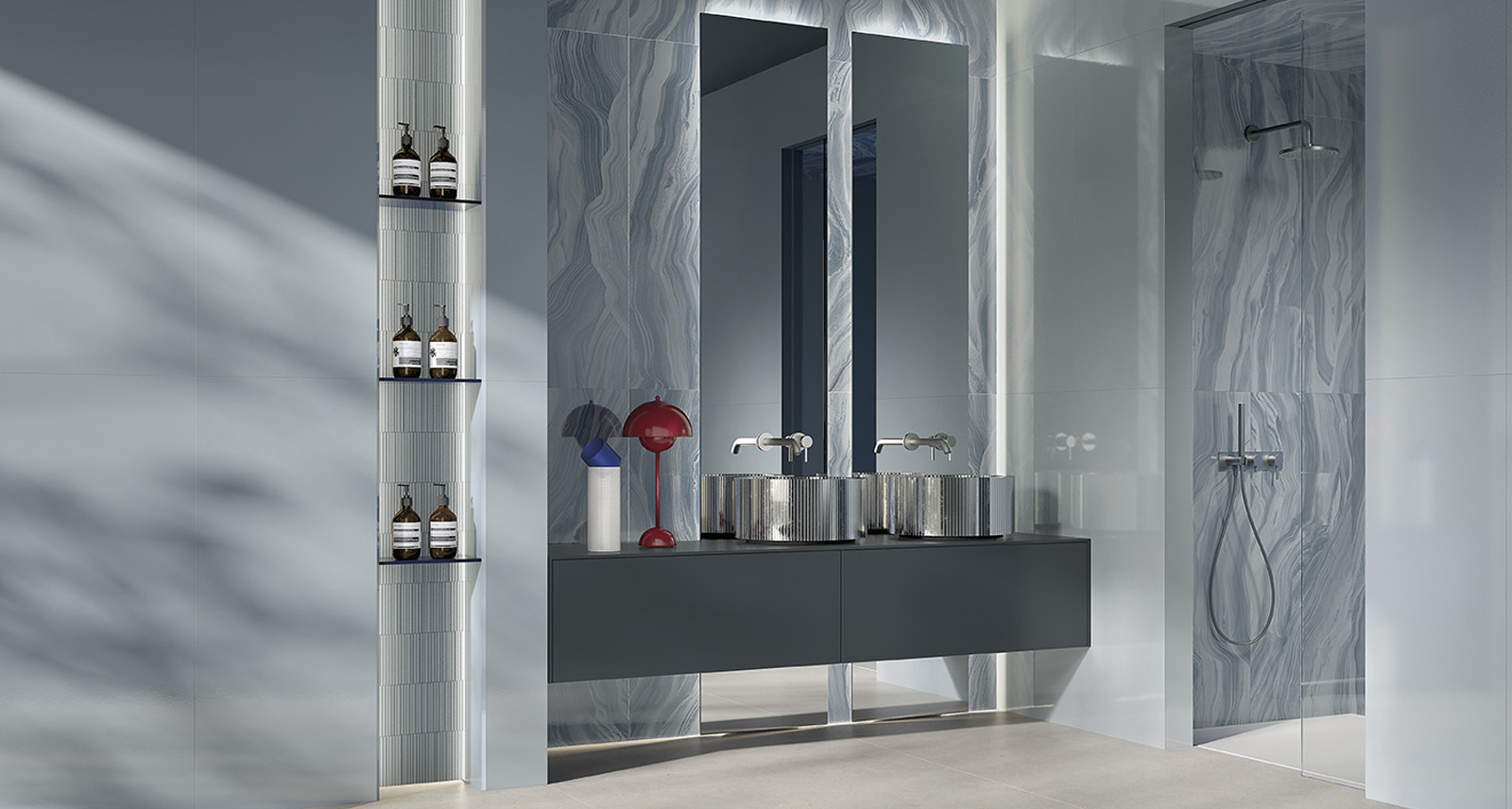
The Materia Brillante collection also offers another truly unique decoration: the Abisso Brillante wall tile.
A sinuous movement of material and lustre, in shades of deep and light blue, somewhere between sea waves and the cross-section of a stone rich in minerals and crystals.
Everyone is free to provide their own interpretation to this decorative surface.
Statement walls in contemporary interiors
Giving decoration space within the project gives value to the space itself. Here's how we envision decorative tiles in design.
Living room. In the living room, decorative ceramics can replace paintings or wallpaper, covering entire walls or backdrops, and decorating alcoves, architectural details and decorative fireplaces.
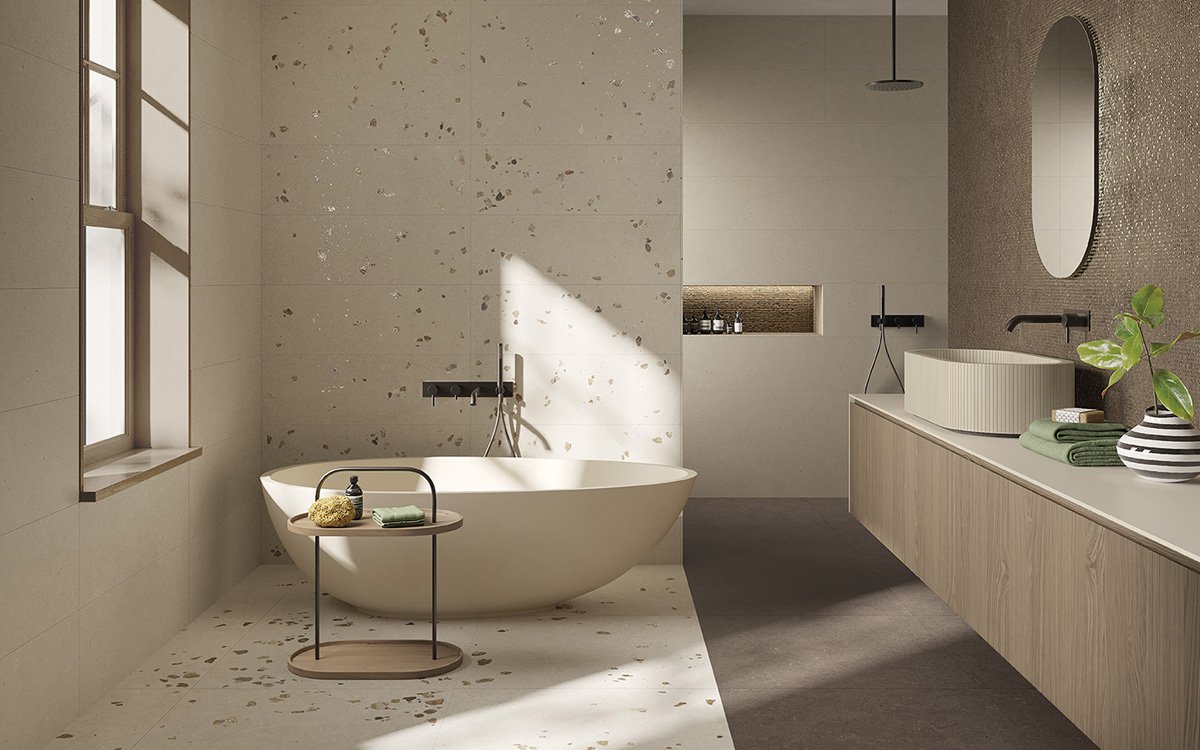
Bathroom. The wellness room is the space of choice for material experimentation. Here, decorative coverings not only guarantee maximum technical performance in terms of waterproofing, safety and hygiene, but can transform the shower or washbasin area into a sensory micro-architecture, where three-dimensional textures and tailored details create the atmosphere of a private spa.
Hospitality. In resorts, lounges and boutique hotels, visual impact is essential. The use of ceramic wall decorations and refined patterns makes it possible to welcome guests with strongly characterful walls, capable of standing the test of time and changing trends without losing their aesthetic power.
Decorative tiles as a design tool
For architects and interior designers, the real challenge lies in combining these endless decorative possibilities with stylistic coherence.
To facilitate this creative process and offer a concrete working tool, Fap ceramiche has created Decor Box: a collection of decorative interior design coverings that allows motifs, 3D textures, patterns, colours and glossy and matt surfaces to be explored.
A compact decorative guide designed to translate interior design visions into real, coherent spaces with a high aesthetic value.