The architecture of light: the power of glossy surfaces
Back

The architecture of light: the power of glossy surfaces

How glossy designer tiles transform and amplify spaces

Light does not simply illuminate space; it shapes and enhances it.
The ability to control, reflect and amplify light is what distinguishes a “brilliant” interior design scheme from a purely functional one.
Today, we take you on a short journey through glazed ceramics, reflections and new atmospheres in interior design.
Light as an architectural material

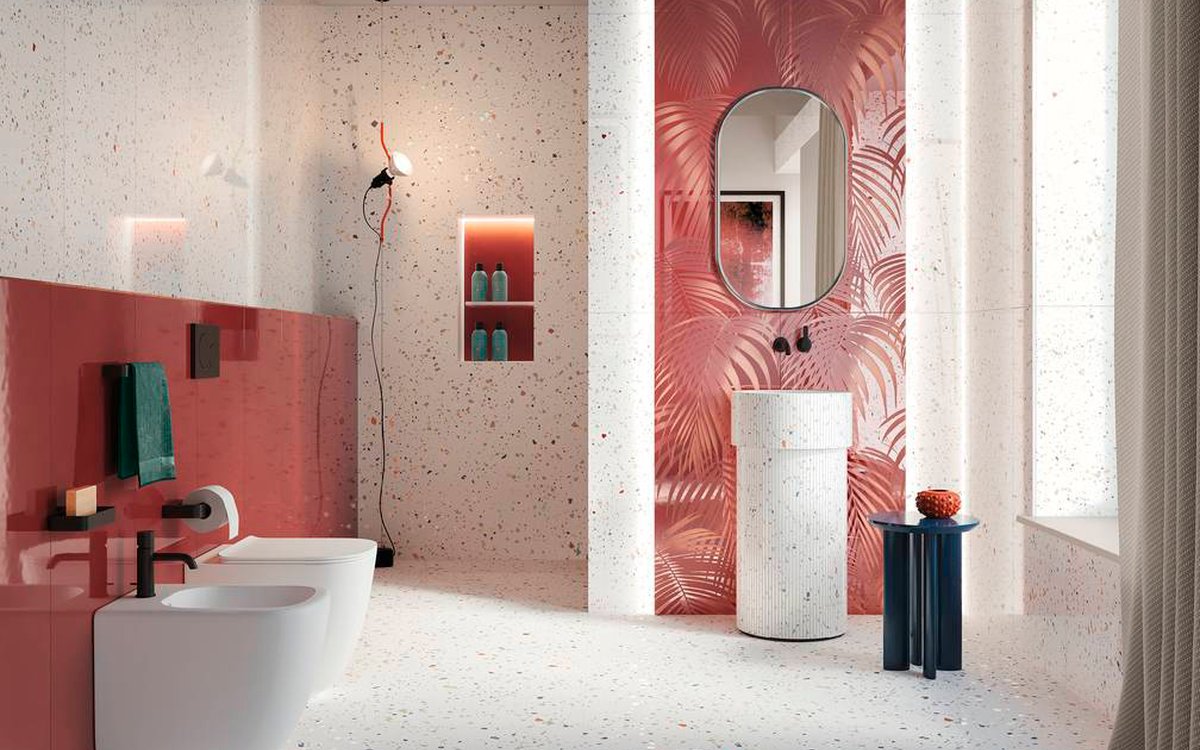
Architects, designers, interior designers, as well as general contractors and luxury hospitality operators, are rediscovering reflective surfaces in architecture as a tool to overcome dimensional constraints and evoke emotionally charged atmospheres.
Indeed, even a masterfully designed lighting scheme can lose its impact if it encounters surfaces that merely absorb luminous energy.
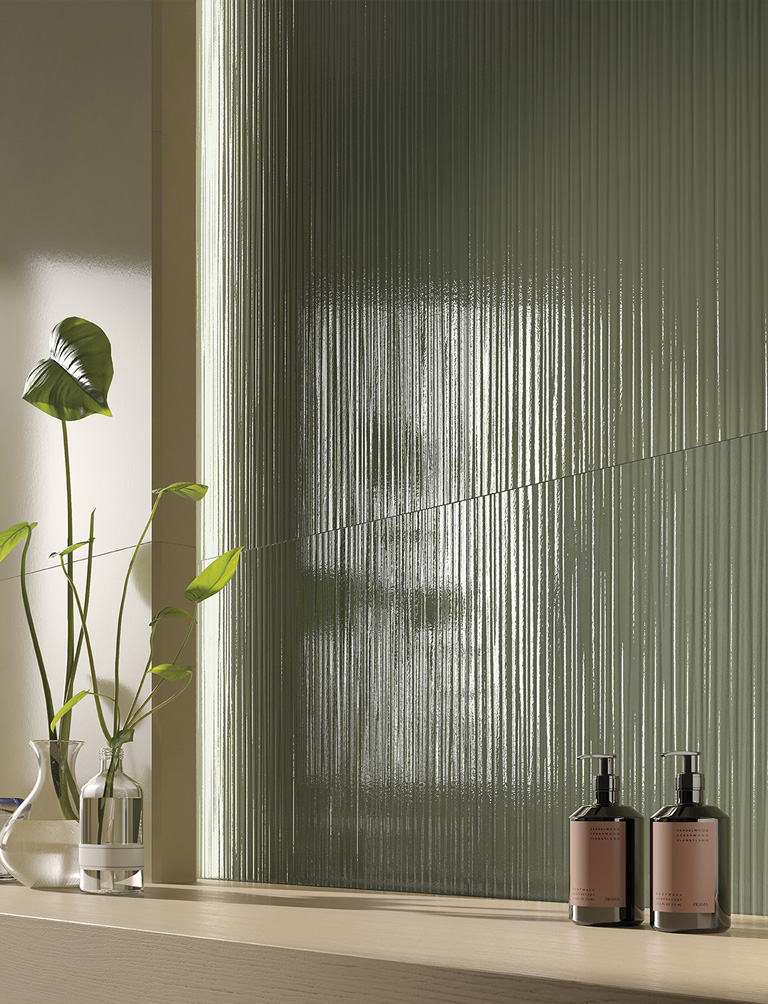
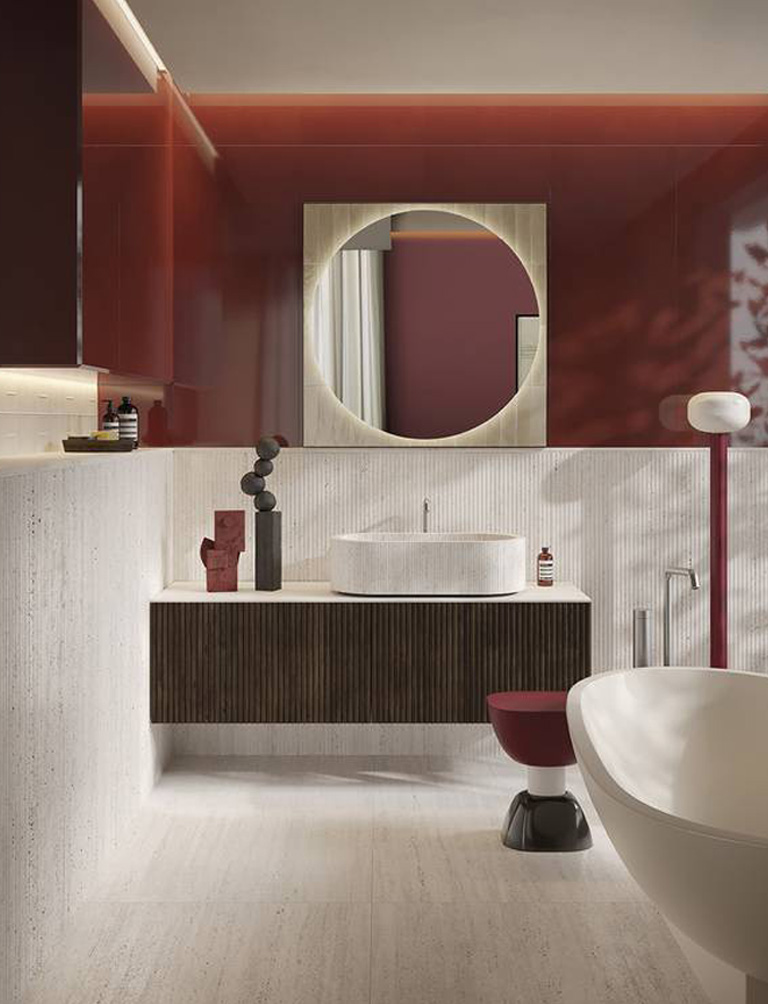
Considering light as an architectural material means understanding that its interaction with walls determines the volumetric and psychological perception of a space.
In this sense, glossy designer tiles become true generators of space.

The strategic inclusion of glossy wall tiles allows natural and artificial light to be directed and amplified, guided towards darker corners and multiplying vanishing points.

The mirror-like surface tricks the eye, doubling perspectives and expanding spatial boundaries, transforming structurally complex rooms into airier, more dramatic volumes.

The return of glossy designer tiles in contemporary interiors

The comeback of glossy wall tiles meets a clear need: to establish a dialogue with the surrounding environment and embrace a more dynamic, vibrant form of luxury.

A glossy finish introduces a vital dynamic element into a space: the wall changes its appearance depending on the time of day, the seasons, and the chosen lighting scheme.
This visual dynamism perfectly addresses the desire for a “wow factor” along with a heightened sense of space and light.

Glazed ceramics: a tradition looking to the future

Glossy ceramics in interior design represent the meeting point between artisanal craftsmanship and materials engineering. Today, this age-old tradition evolves through revolutionary industrial processes.
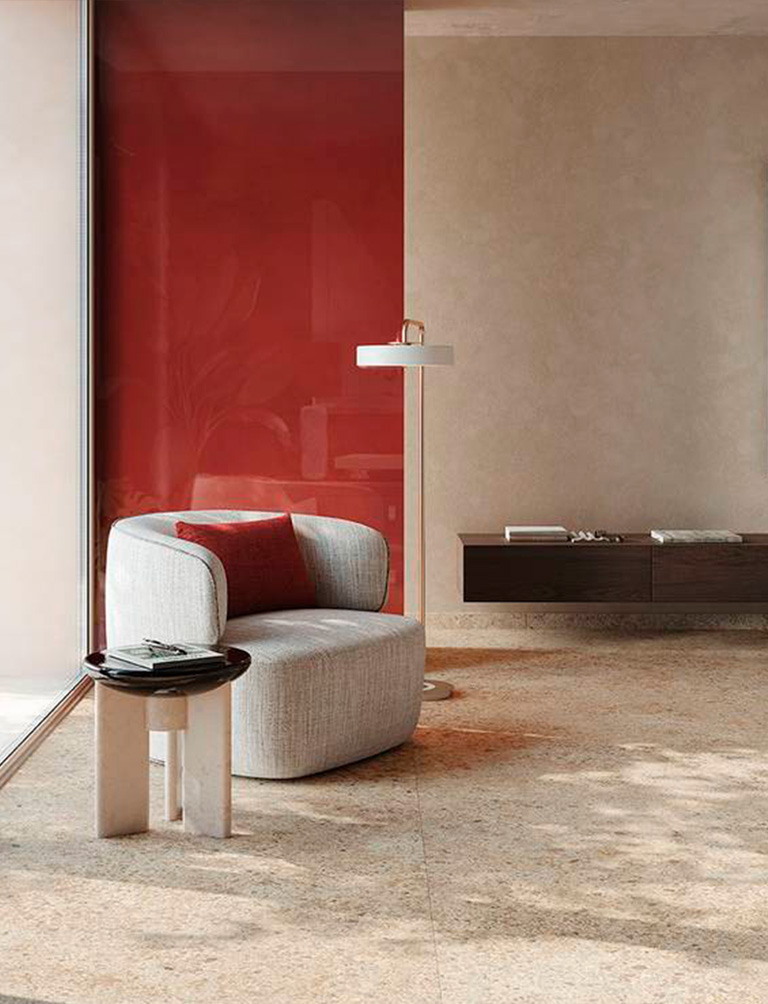
An example of this evolution is the Materia Brillante collection by Fap ceramiche.
Materia Brillante is described as “matter in a liquid state”, where colour melds into a glassy layer that generates a mirror-like depth, redefining the very concept of coverings. Light is not merely reflected, but captured, held and returned with an effect that enhances chromatic saturation.

The extra-glossy finish is achieved through a sophisticated glazing process. Ultra-pure mineral components are applied with millimetric precision, ensuring reflections of great variety and lustre.

Alongside this exploration of liquid colour, technology pushes into new expressive frontiers with the GLIM Glow collection.
“Matter in evolution”, where the ceramic surface ignites with a shifting elegance.
Through the advanced technique of metal vapour deposition, noble and precious metal particles are intimately integrated into the material.
The result is a deep, reflective body that vibrates with every change of light.
The material almost seems to breathe and oxygenate itself, revealing ever-new shades over time that celebrate the imperfect, living beauty of GLIM.
How to use glossy tiles in interior design

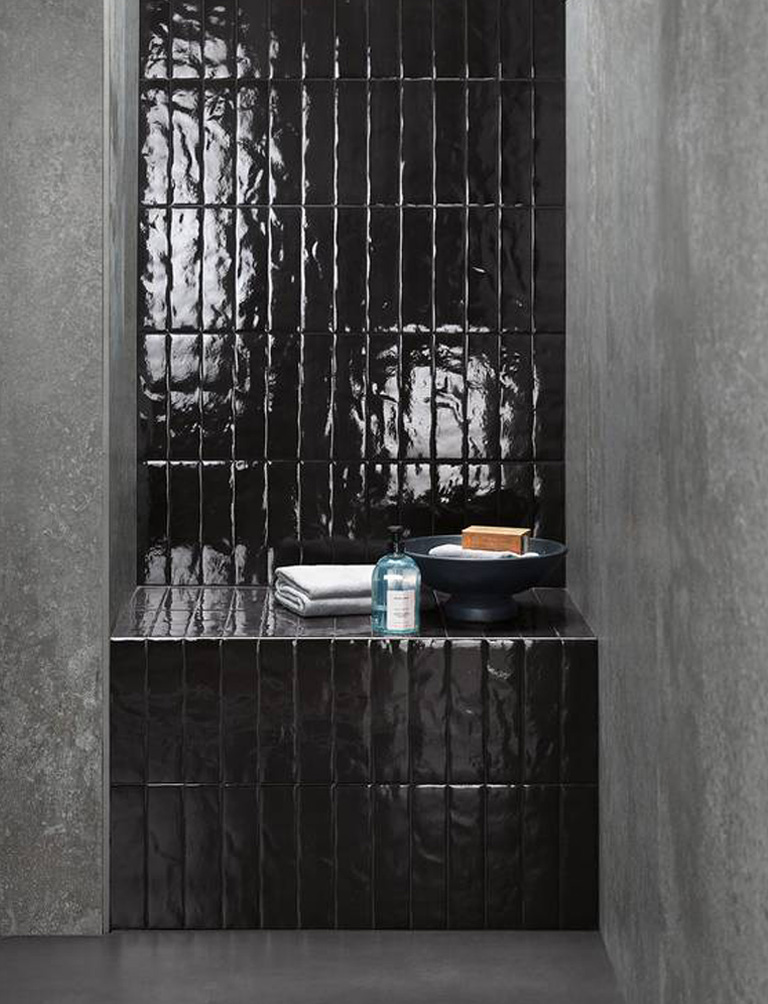
In spas, wellness facilities and en-suite bathrooms, glossy ceramics are an ideal choice, both technically and aesthetically.
The reflective finish amplifies the play of water and soft lighting, enhancing the feeling of relaxation and purity.
From a practical standpoint, it offers an elegant solution for windowless or dimly lit bathrooms, making them feel brighter even when darker shades are chosen, thanks to the extra-glossy finish that illuminates any hue.

The use of glossy tiles also extends to private living rooms, hotel lobbies and the walls of exclusive boutiques.
Creating a full-height feature wall with an extra-glossy finish like Materia Brillante means introducing a kinetic piece of art into the room.

The wall ceases to be a boundary and becomes an ever-changing canvas that reflects furniture, people in motion and the passage of time.

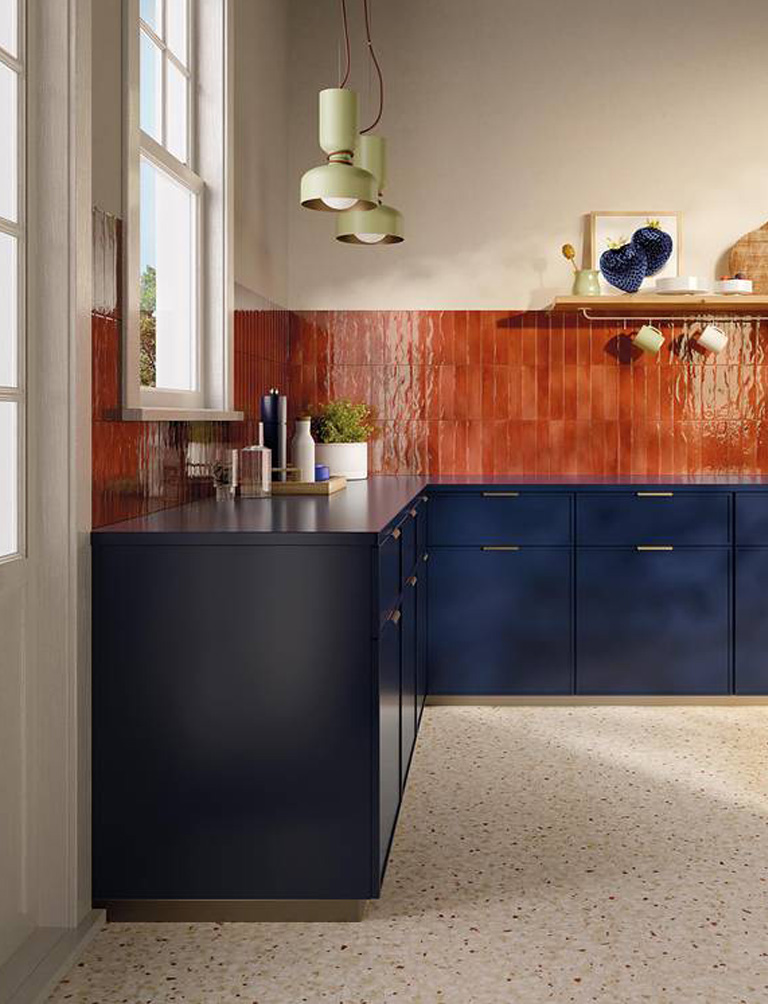
Glossy designer tiles are equally suited to kitchens.
Introducing a glossy wall covering in the splashback area breaks up the static nature of cabinetry. The liquid reflections create an exceptional textural contrast with worktops.
What’s more, the vitreous nature of the glaze ensures ease of cleaning, stain resistance and heat resistance: essential qualities for a signature splashback that promises exceptionally high durability standards.